Case study
How Outschool scaled personalization with multi-agent AI decisioning
Personalization is easy to talk about. Making it work across a real lifecycle is harder.
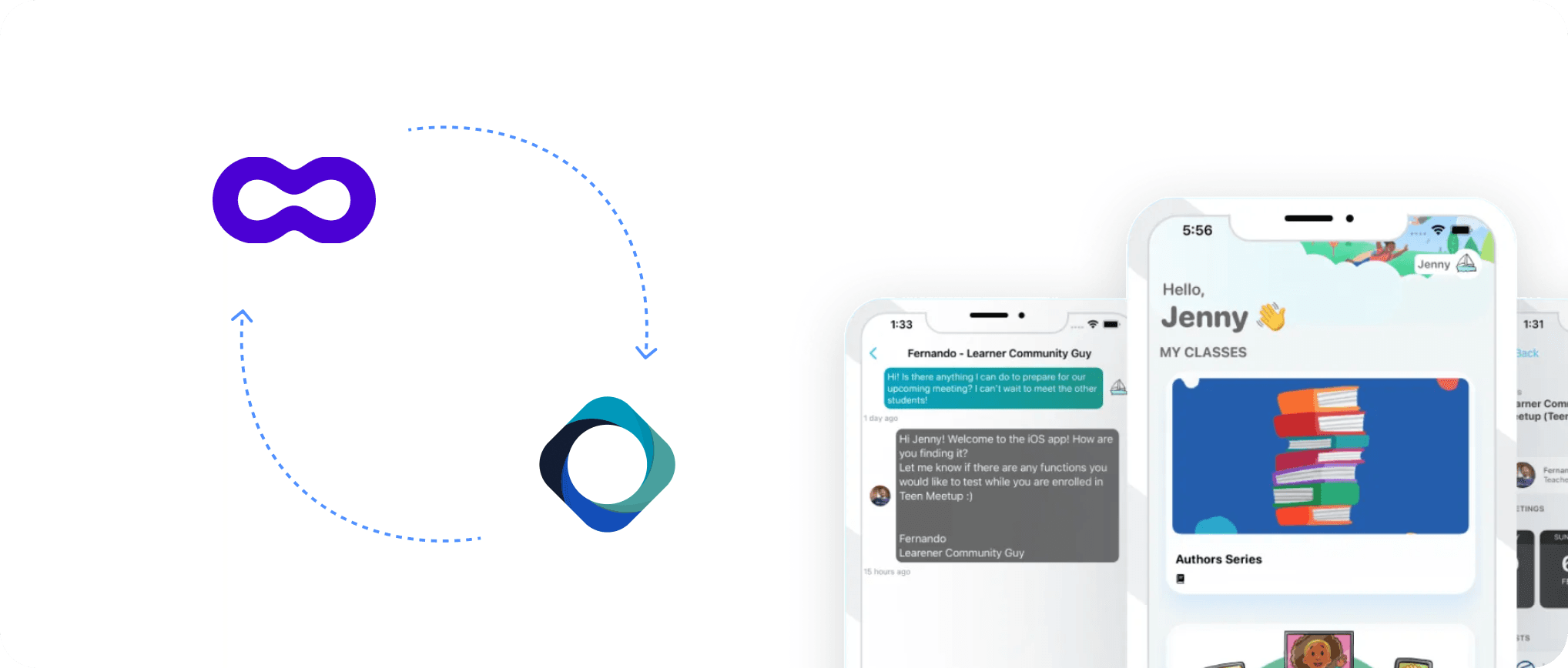
The Challenge: Lifecycle personalization breaks at real-world complexity
Personalization is easy to talk about. Making it work across a real lifecycle is harder. For Outschool, lifecycle performance depended on getting the right message to very different families, parents with different age groups, buying behaviors, and content affinities, across multiple weekly sends.
The intent was clear:
Personalize content meaningfully
Improve purchase conversion
Learn faster without increasing operational overhead
The problem was scale. Outschool’s lifecycle setup quickly grew complex:
Multiple campaigns (Thursday + Sunday sends)
Segmentation by buyer status (member, non-member, à-la-carte)
Age-based personalization (with age / without age)
Topic-level experimentation
Manual cadence decisions
What started as “just a few dimensions” turned into 12 parallel tests per cycle, each requiring setup, monitoring, reporting, and iteration.
At that point, lifecycle wasn’t limited by ideas, it was limited by human bandwidth.
The insight: Lifecycle is a decisioning problem, not a content problem
Outschool didn’t need more one-off tests & wins. They needed a system that could:
Learn across many strategies simultaneously
Adapt in real time as performance signals emerged
Optimize content, topic, audience, and cadence together
Instead of treating lifecycle as:
“Run an A/B test, pick a winner, move on”
They reframed it as:
“Continuously decide the best strategy for each user, across dimensions, at scale.”
That required multi-agent decisioning — not static segmentation.
The approach: Multi-agent personalization across the lifecycle stack
Outschool partnered with JustAI & Verbose to deploy AI-driven lifecycle decisioning, powered by multiple specialized agents working together.
The agents worked across three layers:
1️⃣ Deeper segmentation (who)
Rather than locking users into rigid segments, the system evaluated performance dynamically across:
Transactional vs. subscription users
With age vs without age
Cross-segment behavioral signals
No hardcoded rules.
No exploding campaign trees.
Just continuous learning at the cohort level.
2️⃣ Topic & strategy optimization (what)
Instead of testing one theme at a time, the system explored multiple content strategies in parallel, including:
Pop-culture driven topics (e.g., Taylor Swift)
New creative directions (e.g., changing email sections with a variety of topics)
Structural changes (hyperlinked sections, top-loaded CTAs)
Each strategy competed in real time.
Winning topics automatically received more traffic.
Underperformers were deprioritized without manual intervention.
3️⃣ Send time & cadence learning (when)
Outschool expanded beyond content into cadence experimentation, testing:
Day combinations (Mon–Thu, Tue–Fri, Wed–Sat)
First-send vs second-send timing
Multi-day vs single-day sequences
The system evaluated not just opens or clicks, but downstream purchase behavior, allowing cadence decisions to be optimized alongside content.
What happened: Learning at scale, not in silos
🚀 Speed & scale of experimentation
Within a couple of months, Outschool achieved:
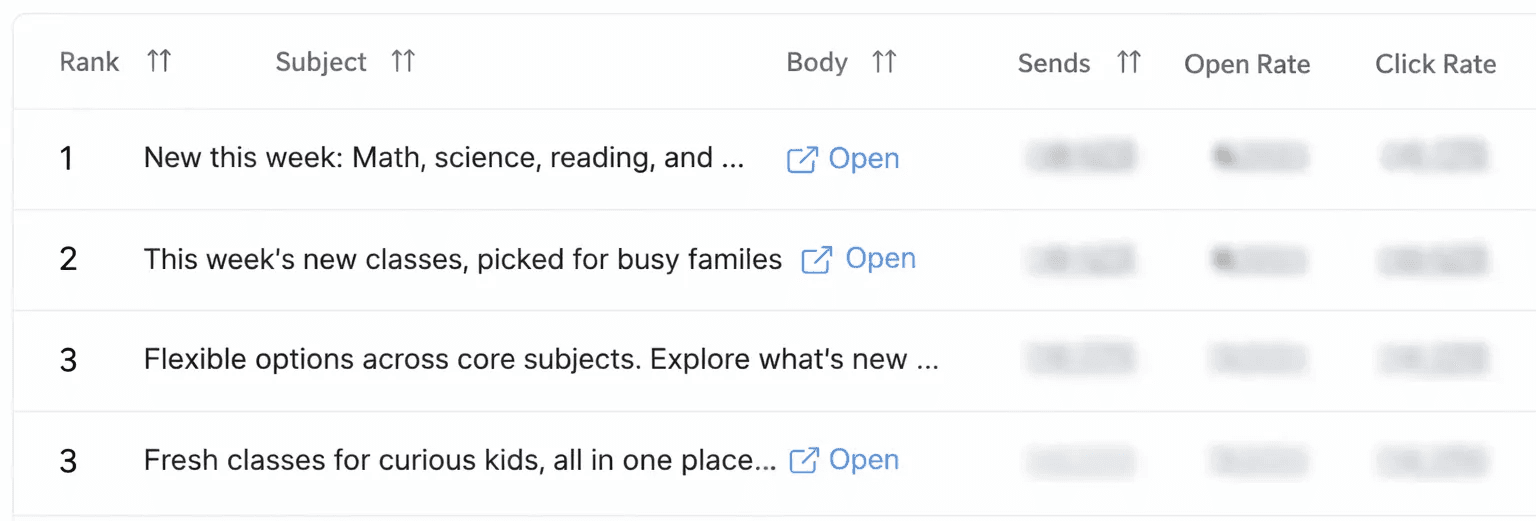
307 email variants tested
100+ AI decisions (replacing human intervention) dynamically reallocating traffic
4M lifecycle messages powered by AI
The equivalent of 12 years of one-off A/B testing compressed into weeks
This wasn’t faster testing. It was parallel learning across strategies, audiences, and timing.
Performance impact: Incrementality that paid for itself
📈 Core conversion lifts
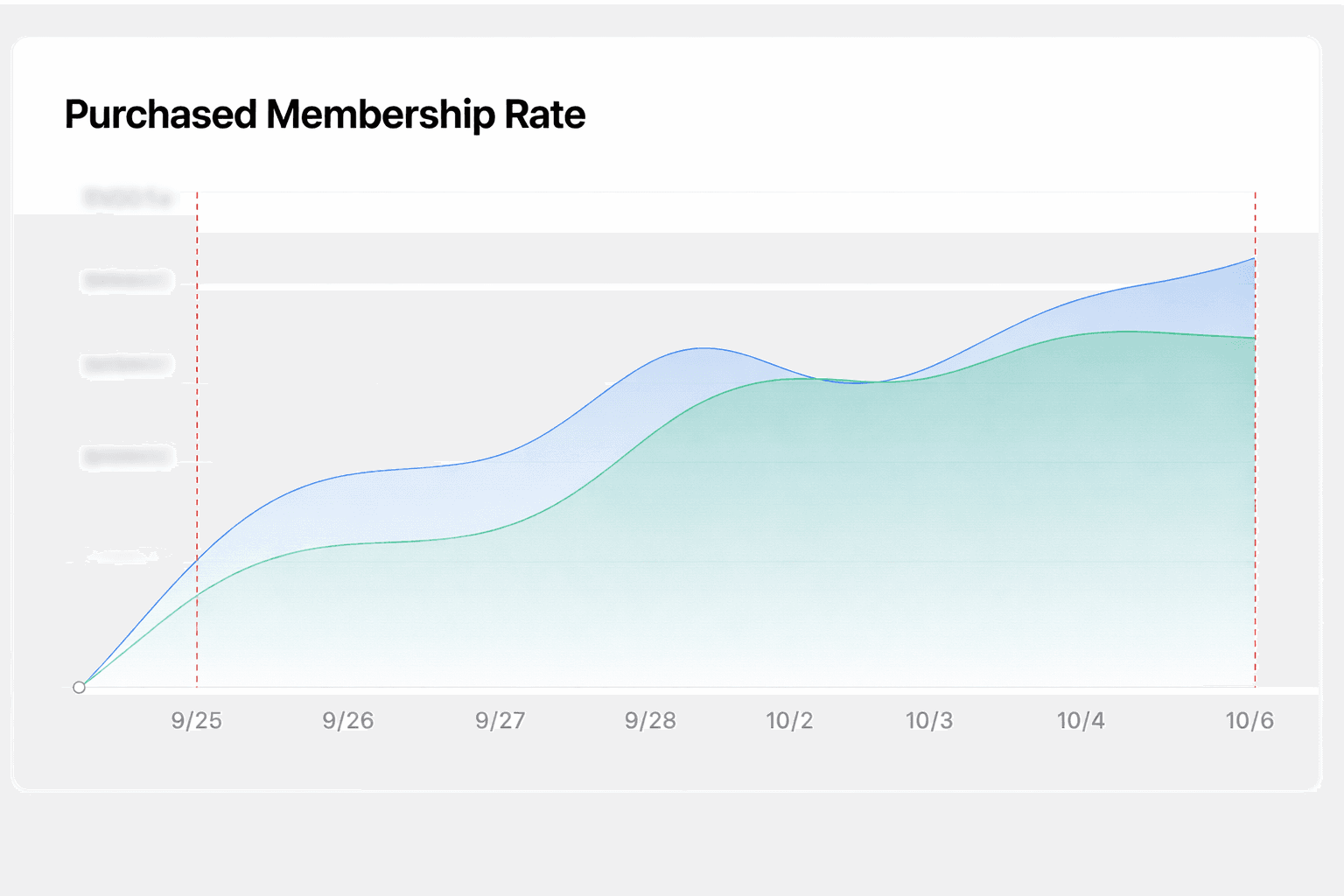
Email 1
+33% lift in purchase membership rate
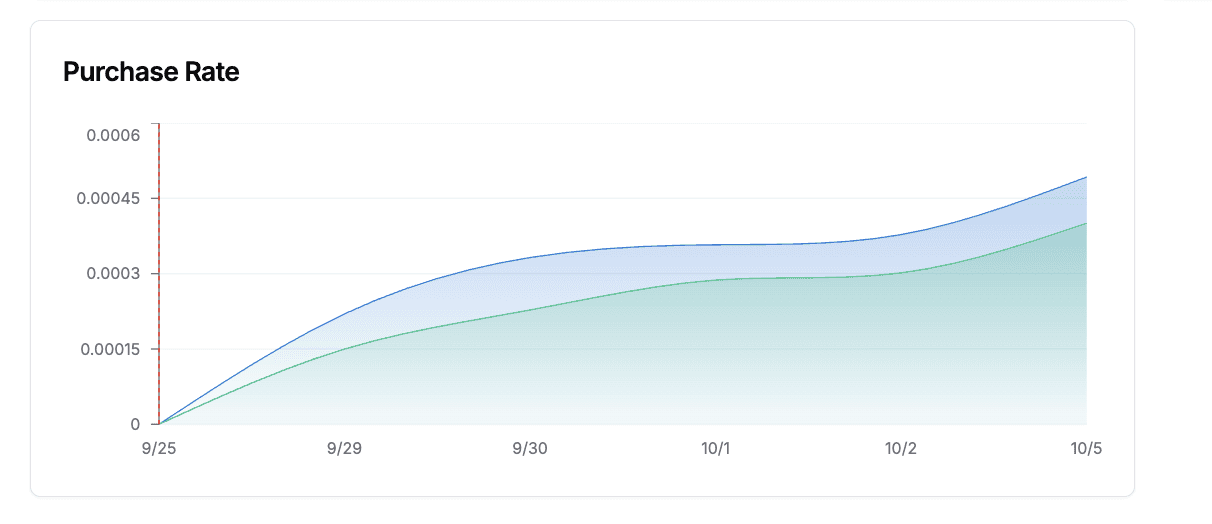
Email 2
+24% lift in purchase rate
+110 incremental conversions in under 2 weeks
How the system learned (and improved)
Phase 1: Exploration
Early runs trended negative across some cohorts.
Instead of stopping, the system:
Captured signal
Recalibrated strategy weights
Auto-tuned topic distribution
Phase 2: Adaptation
Performance turned positive as:
Stronger topic-audience matches emerged
Underperforming strategies lost traffic automatically
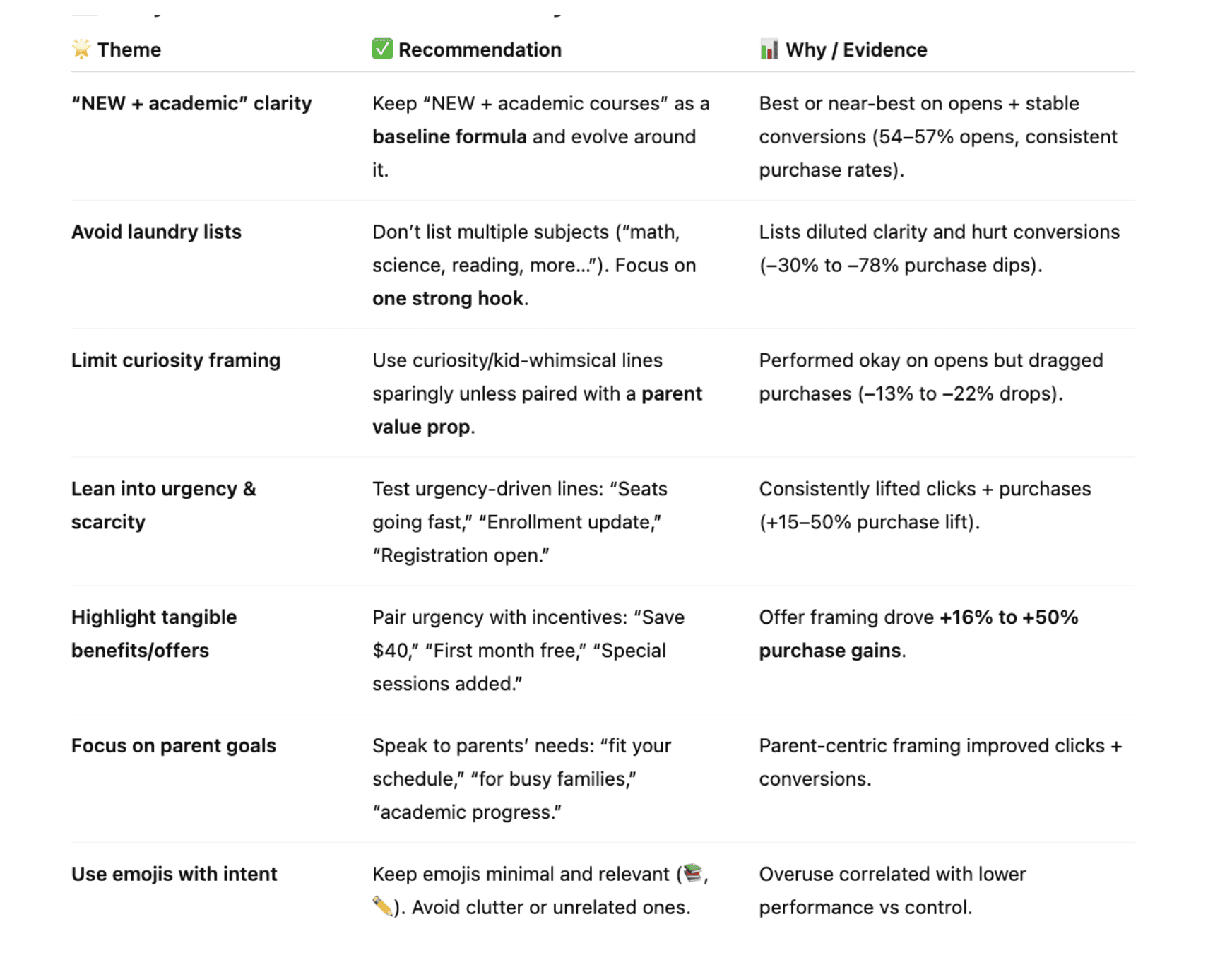
Phase 3: Exploitation + expansion
New topics were introduced.
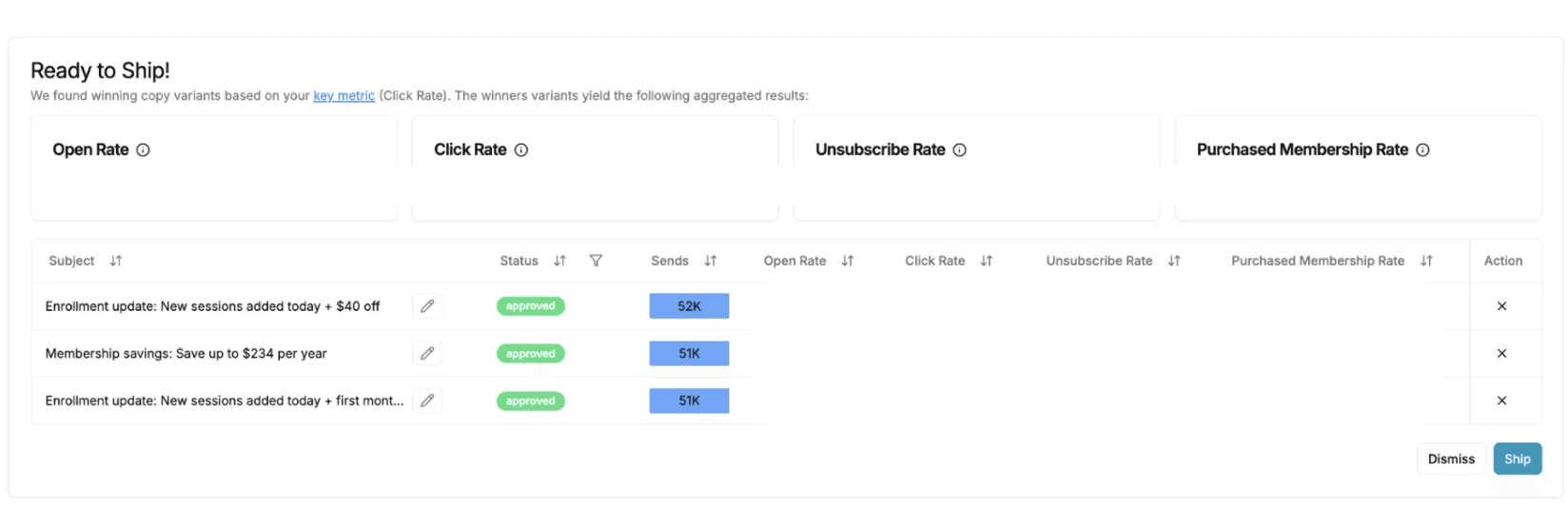
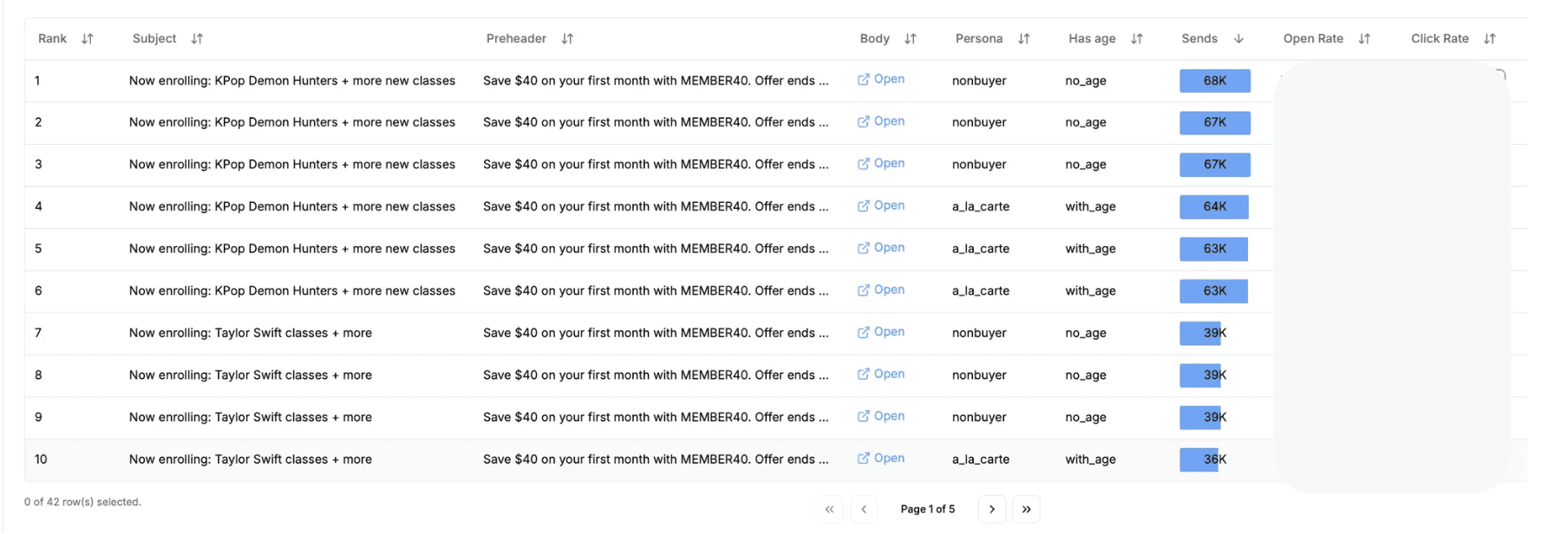
K-Pop Demon Hunters emerged as a standout:
2× higher click rates
20% lift in membership conversions
Follow-up runs pitted it directly against prior winners (Taylor Swift), and it continued to outperform — without a marketer needing to “pick” the winner.
Segment-level intelligence (without segment sprawl)
Key insights emerged organically:
Age-based cohorts consistently outperformed, especially for high-intent purchases
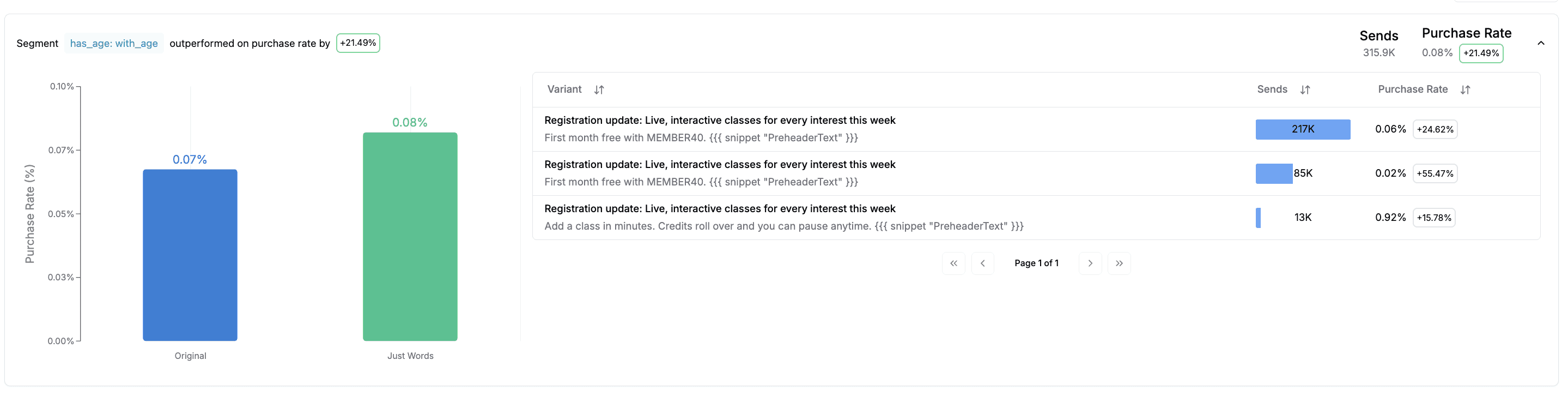
Click-rate lifts were directionally aligned with purchase lifts across all segments
Certain strategies resonated differently across buyer states — insights that would have required dozens of manual tests previously
These weren’t just results. They became inputs into future lifecycle strategy, without adding complexity.
Operational impact: From campaign chaos to one system
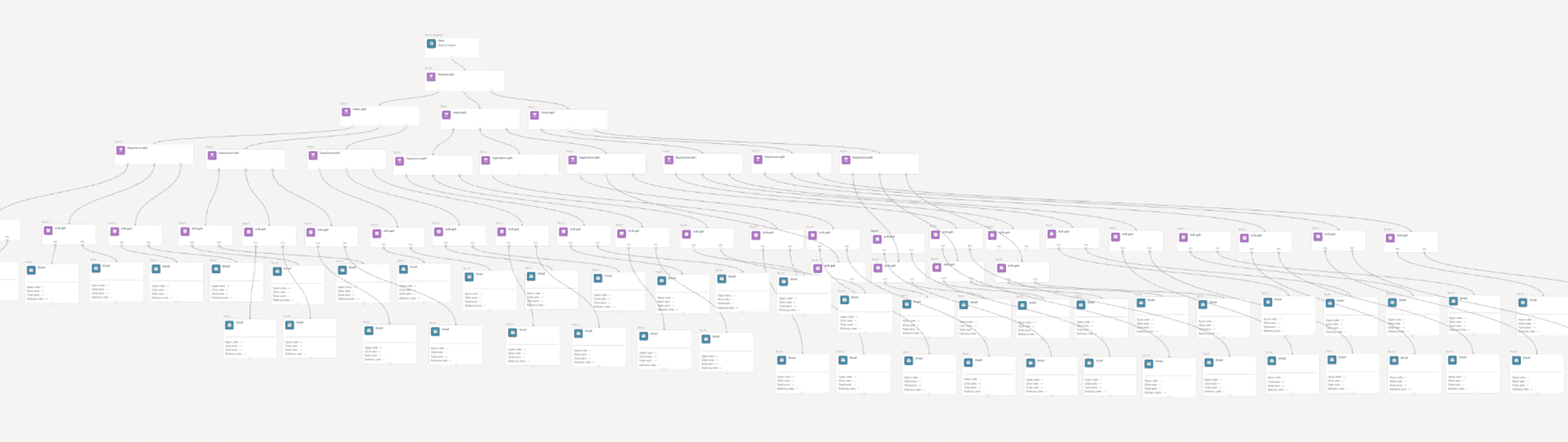
Before
2 campaigns
6 branches
12 tests per cycle
Heavy setup + reporting overhead
After
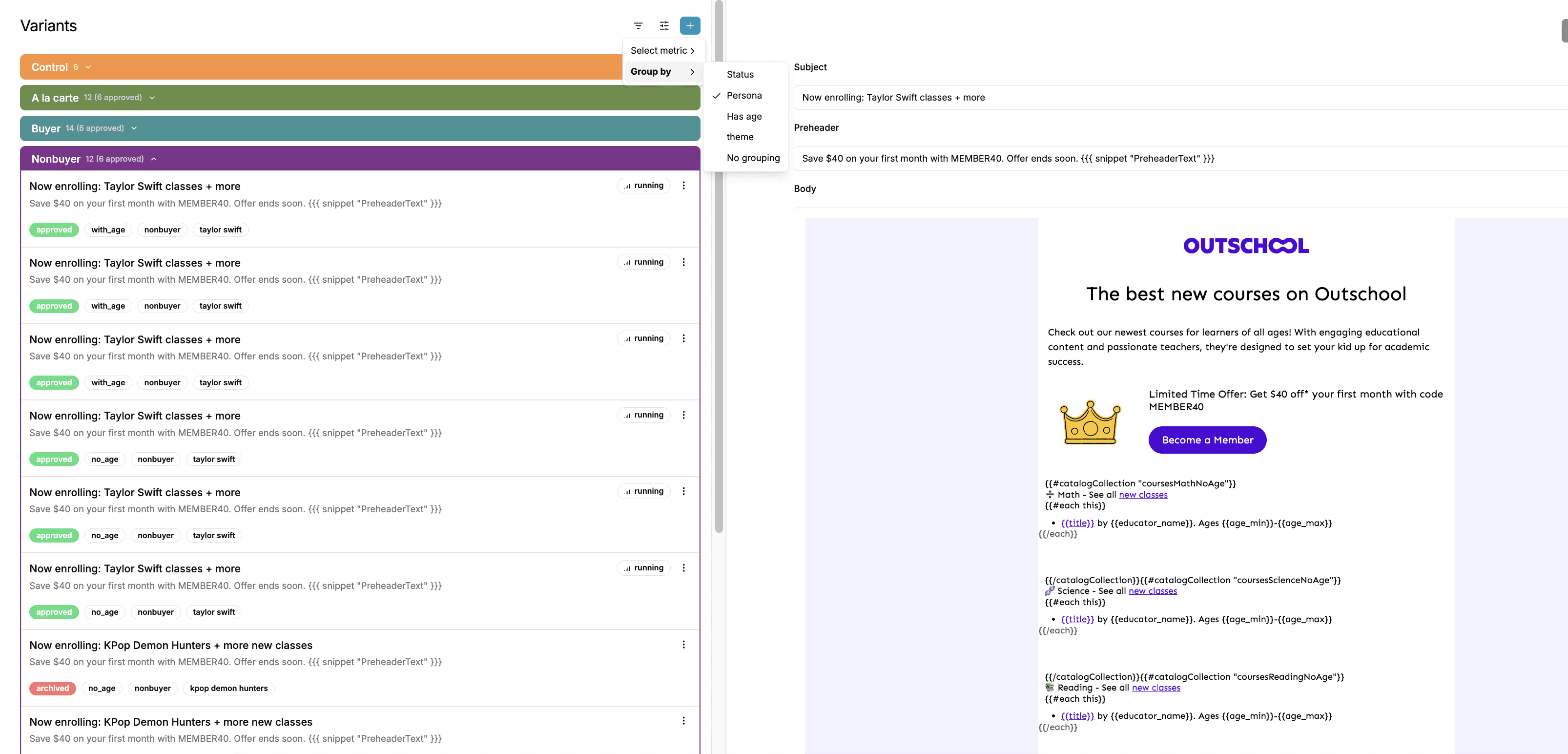
One unified AI-decisioning setup
No branching logic
One test surface across:
Audience
Topic
Strategy
Cadence
Lifecycle became simpler to run while becoming more sophisticated in outcome.
Early cadence wins
Signals emerged quickly:
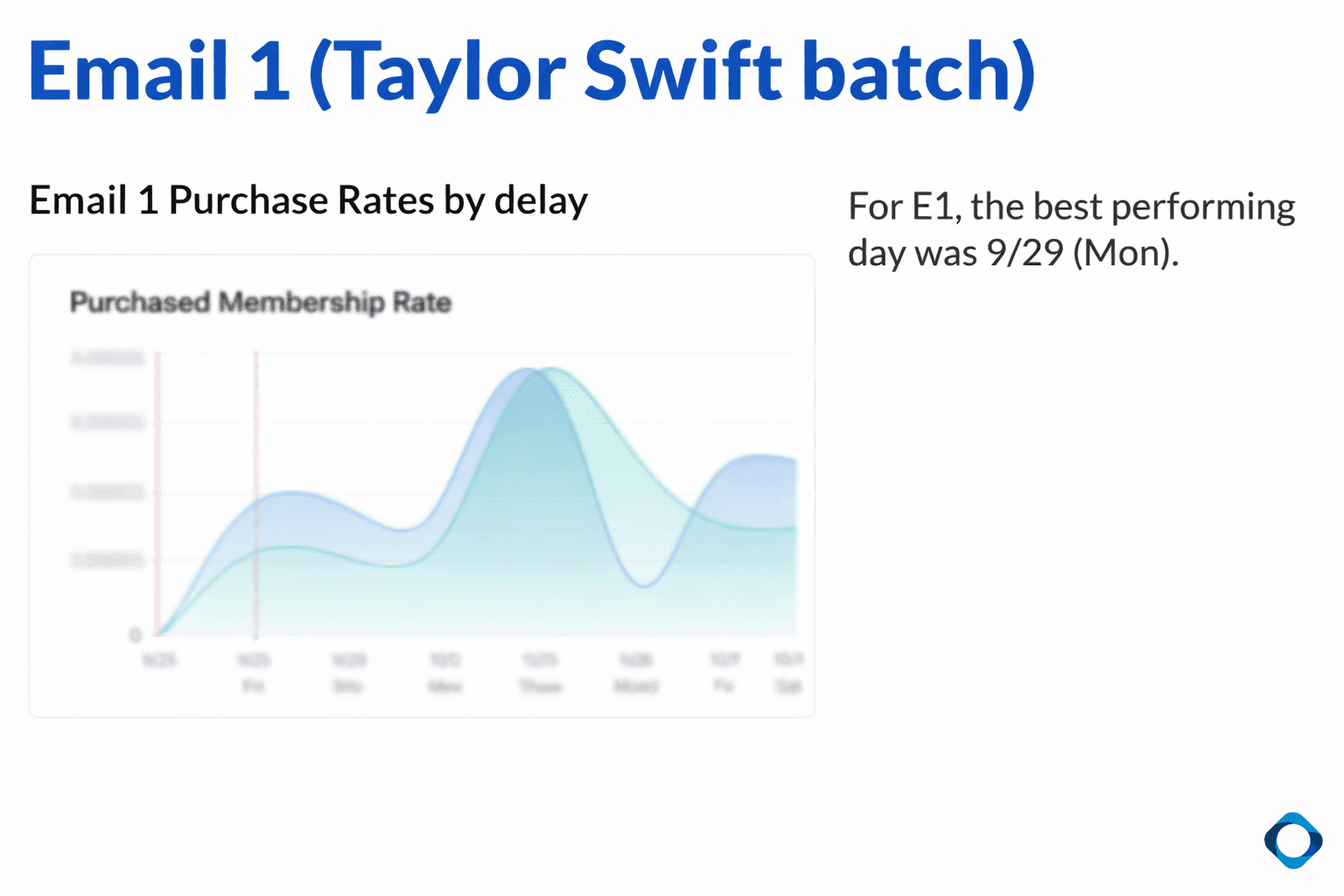
Mondays outperformed for first sends
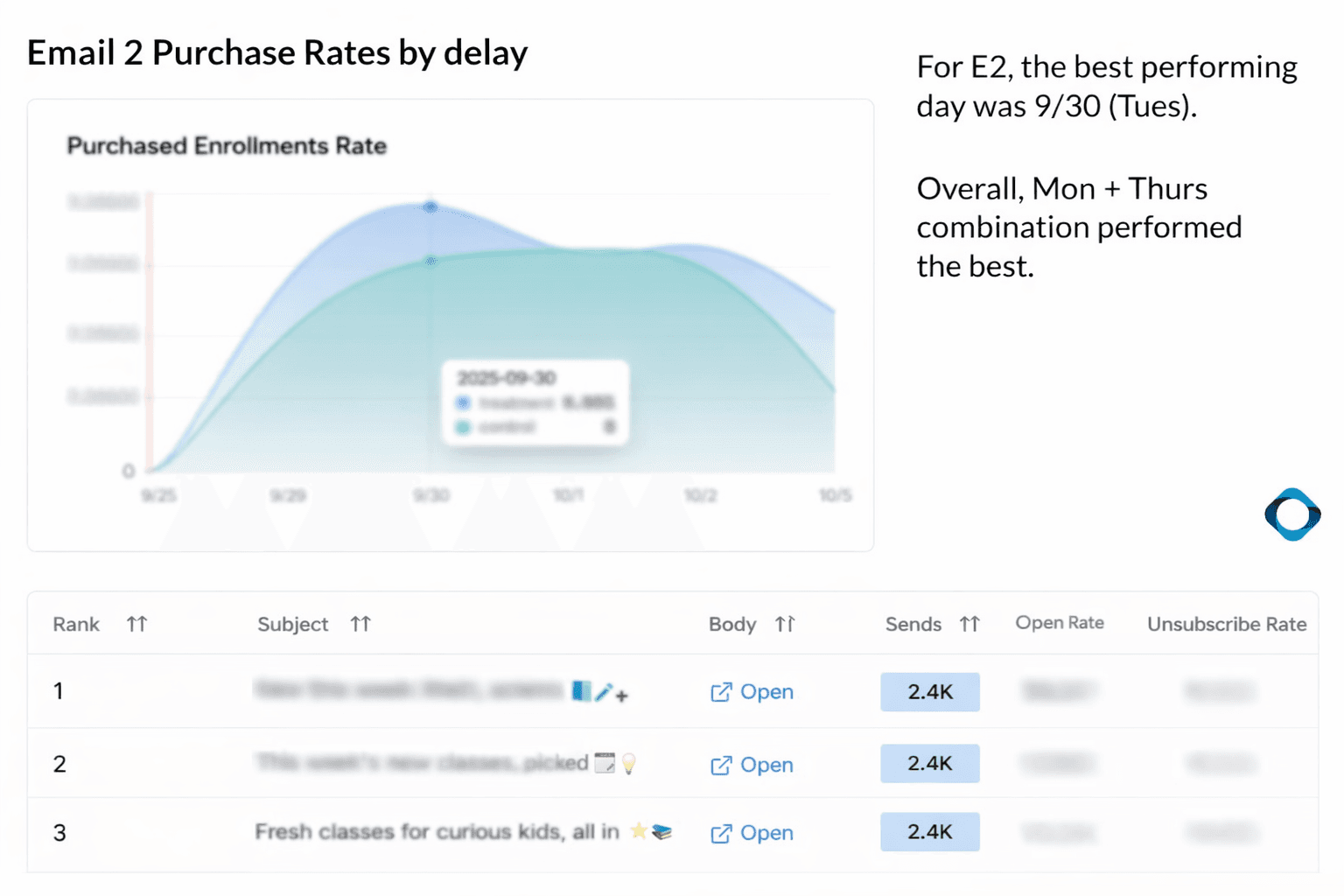
Tuesdays (with Thursdays close behind) worked best for second sends
Monday–Thursday emerged as the strongest overall pairing
This unlocked next-level questions:
Single-day vs two-day sends
Optimal delay between sends
Cadence personalization by cohort
All without rebuilding the system.
Why this matters for lifecycle marketers
Outschool didn’t win by getting lucky with a few tests. They won by changing how lifecycle decisions to run on auto-pilot.
Instead of:
Static segments
Isolated A/B tests
Slow, local learning
They moved to:
Continuous cohort-level learning
Multi-strategy competition
Automatic traffic reallocation
Marketers focused on strategy, not orchestration
Lifecycle became holistic, spanning who, what, and when, without multiplying effort.
The outcome: A scalable lifecycle operating model
By treating lifecycle as a decisioning system, Outschool unlocked:
Faster learning
Measurable incrementality
Operational leverage
Reusable lifecycle intelligence
This is what modern lifecycle looks like:
Not more rules.
Not more segments.
But systems that learn as fast as your users evolve.
A huge congrats to Erica Yamamoto, Head of Marketing at Outschool, along with Andrew, Head of Data, for diving head first into AI-innovation in Marketing. Erica and her team set a strong example of what the next generation of lifecycle marketing looks like - where complex multi-faceted strategies scale with AI.
A big shoutout to Verbose, Outschool’s dedicated strategic lifecycle team. While JustAI powered the decisioning layer, Verbose partnered closely with the Outschool team to take a big swing on JustAI’s AI-driven lifecycle personalization. Verbose helped shape a clear success criteria, strong strategic hypotheses, and how early learnings could compound beyond a single experiment into a scalable lifecycle operating model. They helped Outschool move from “we have lots of ideas” to a structured lifecycle system that AI could actually optimize
Combining AI with a strategic framework to lean against, we solved for hyper-personalization in a complex lifecycle setup.