Blog
Lifecycle Messaging Field Guide : Can an Email win by being opened Less?
Written by Sohum Bajaj
793 live experiments across 30+ brands reveal what lifecycle messaging actually works, broken down by sector, scored on revenue actions, not opens.

Here is an uncomfortable truth. The metric at the top of your email dashboard can point you the wrong way. Some of the best campaigns we have ever measured had falling open rates.
We know because we tested it, 793 times. This guide comes from 793 live experiments across more than 30 brands. Each one ran against a holdout, a group that got the original message, so we could measure the new one fairly. And each was scored on the action the team actually cared about: account openings, course enrollments, in-app actions, or new subscriptions. Not opens. Not clicks.
One more thing before you dive in. Most advice about lifecycle messaging sounds the same no matter what you sell. That is usually a sign it will not help you much. A learner who is drifting away, a landlord still setting up an account, and a streaming subscriber who has gone quiet all need very different things. The space between them is where most of the easy wins live.
So this guide is organized by sector. Skip to the one you work in, or read them all. Some of the patterns rhyme.
Score campaigns on the action that earns money, not on opens or clicks
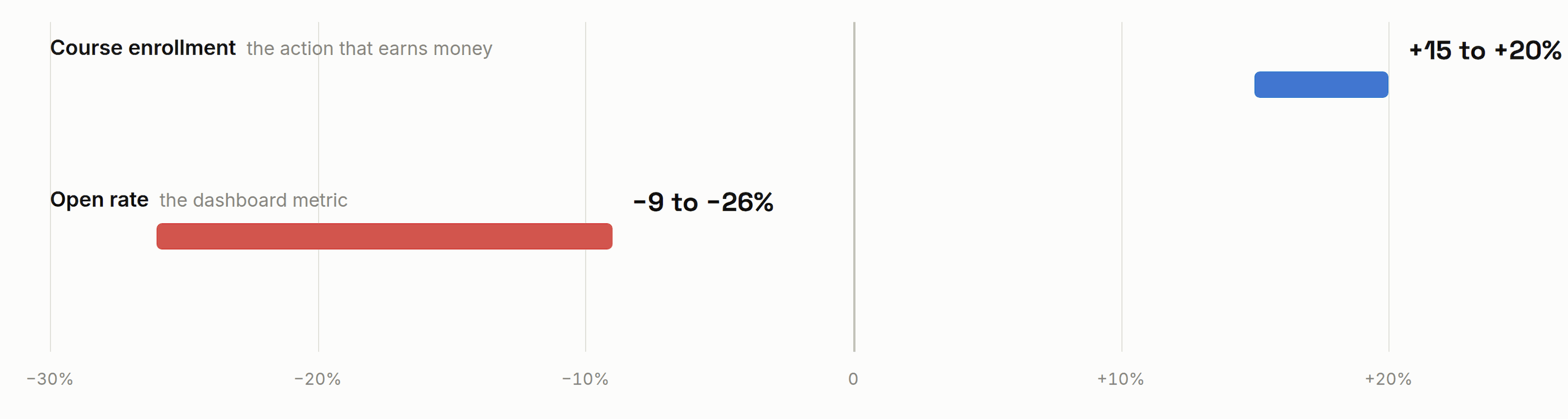
The numbers on a standard email dashboard often point the wrong way. The clearest example is re-engagement. A group of "win them back" emails lifted course enrollment by 15 to 20 percent against their holdouts. On those exact same winning campaigns, the open rate dropped by 9 to 26 percent.
Read that again. A team watching opens would have switched off its best-performing emails.
Clicks and conversions disagree often enough that the only metric you can trust is the one tied to revenue, measured against a control group.
Keep that in mind as you read each sector below.
B2B SaaS and productivity
The sector: software sold to businesses, where a new user has to set the product up and reach a first "aha" moment before they stick around. Think project tools, design tools, and team workspaces.
What the data shows: the biggest opportunity is onboarding, the first few days after someone signs up. Sequences that walked a user through one feature at a time beat sequences that tried to show off everything at once. And different kinds of users responded very differently to the same email. A single welcome flow for everyone leaves money on the table.
Practical moves:
Teach one feature per email, and send it when the user signs up rather than on a fixed weekly schedule.
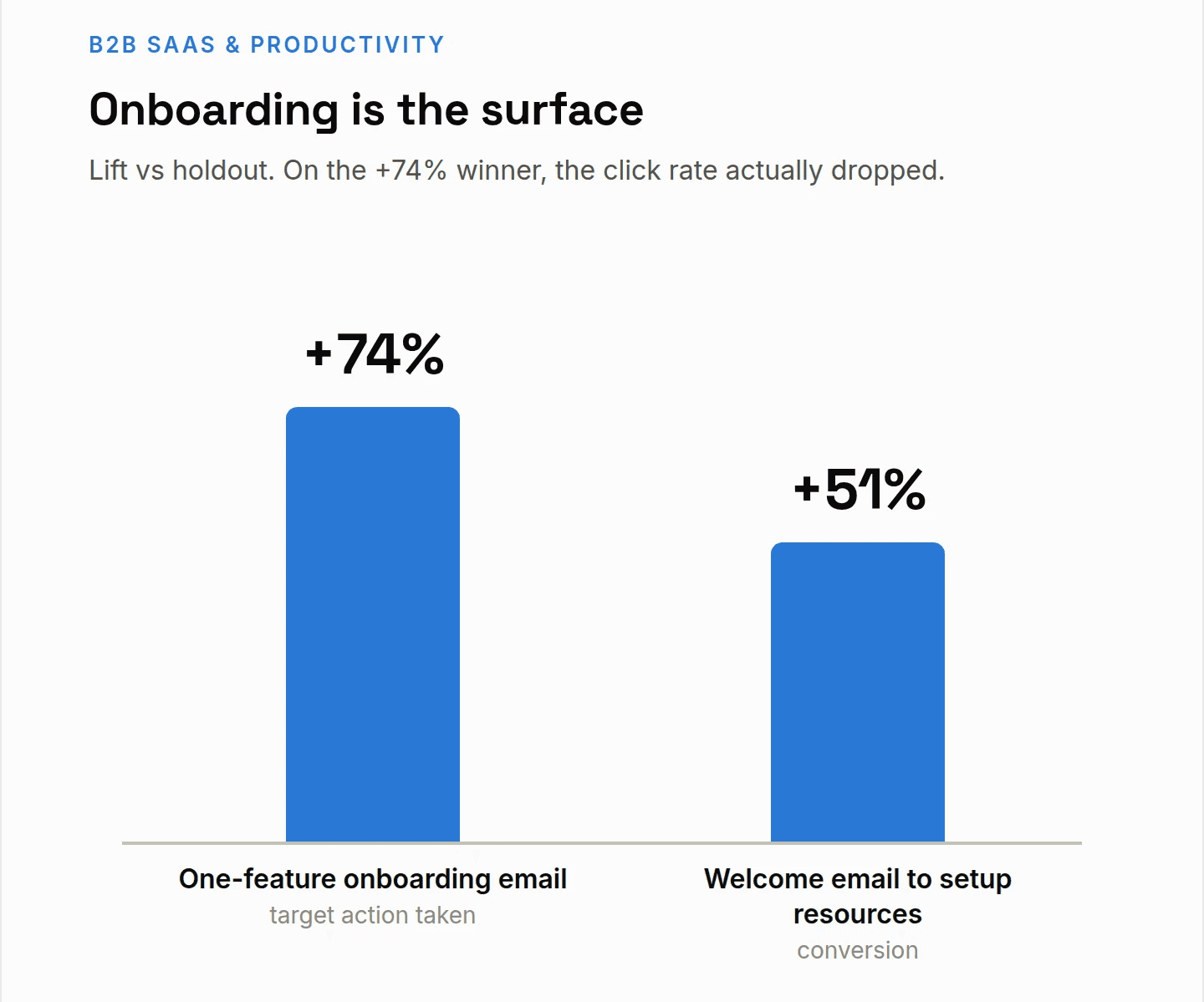
Score these emails on whether the user took the action, not on whether they clicked. In one onboarding email the click rate dropped while the target action rose 74 percent against its holdout. A welcome email pointing users to setup resources lifted its conversion 51 percent.
Build separate onboarding tracks for different roles and company sizes instead of one path for all.
Treat "user reached the activation milestone" as the goal, not "user opened the email."
SaaS wins on what a user does in week one. The next sector wins on what a user already does every day: move money.
Fintech and investing
The sector: apps that hold or move people's money, like investing, banking, and payments. Users here are cautious, and many messages are functional (a payment went through, a payment failed).
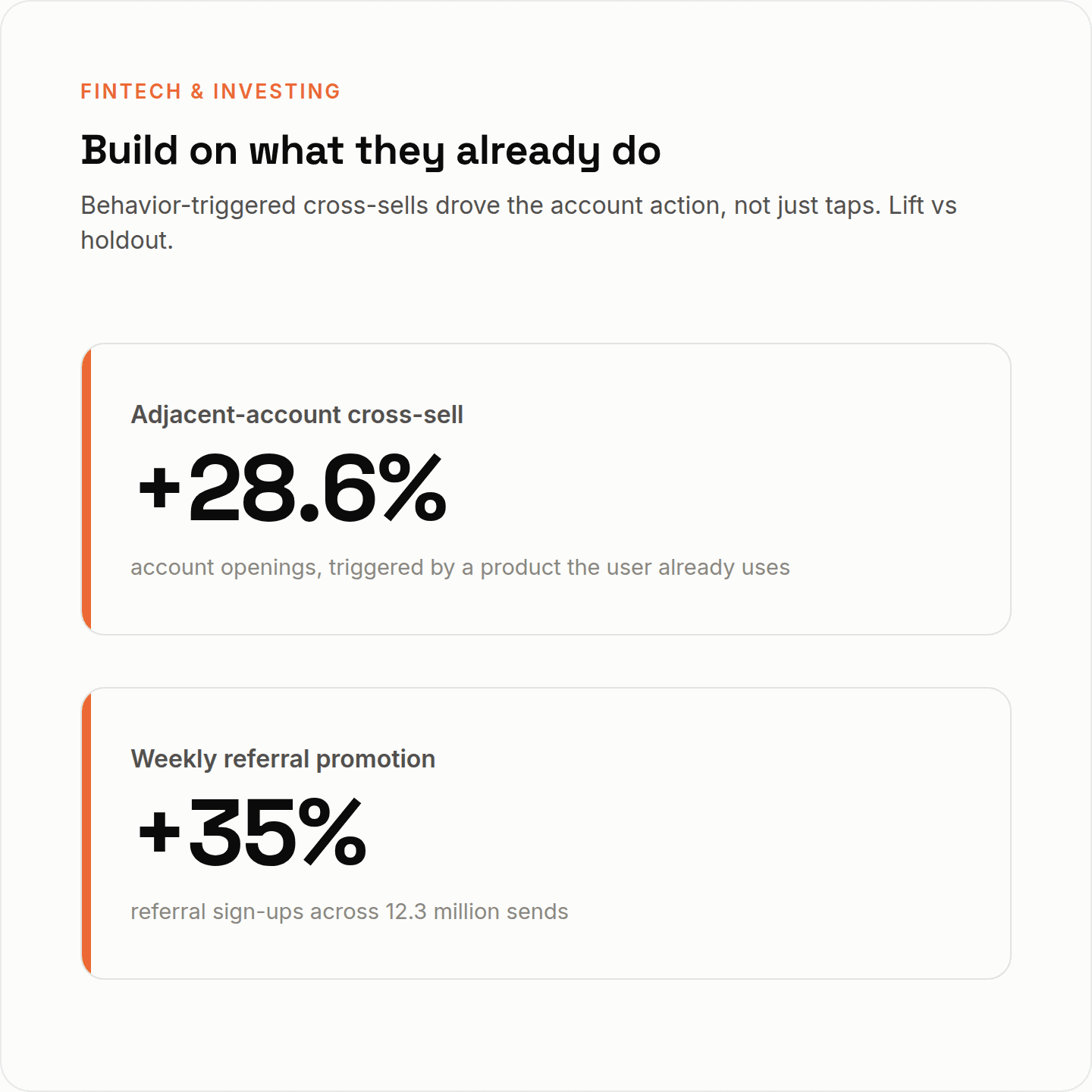
What the data shows: the strongest campaigns were cross-sells that build on something the user already does. If someone already uses one product, an invitation to a related one lands well. And it drives the actual account action, not just taps. Functional messages, like payment confirmations and failed-payment notices, worked best kept simple and clear.
Practical moves:
Trigger a cross-sell off a behavior that makes the next product a natural fit, and measure it on the account opened, not the click. One cross-sell that invited existing users to open an adjacent account lifted account openings 28.6 percent against control. A weekly referral promotion lifted referral sign-ups 35 percent across 12.3 million sends.
Leave failed-billing and payment-recovery messages plain and direct. Dressing them up cost between 15 and 36 percent on the recovery action across that family of campaigns.
Put your creative energy into behavior-triggered cross-sells, and keep anything transactional clean.
Fintech rewards you for building on existing behavior. Education flips it. There, the game is catching a behavior right as it fades.
EdTech and learning
The sector: apps that teach something, like courses, languages, and study tools. Success means a user keeps coming back and completes lessons. Winning back people who slip away is the whole game.
What the data shows: lapsing learners were the most winnable audience in the set, and the way you frame the message matters. Timing matters even more, because the chance to win someone back fades fast. The same message also performed very differently across languages. The weakest language tended to be the same one across many campaigns, which usually means a translation-quality problem rather than a difficult audience.
Practical moves:
Send the first win-back message within a day of a missed session. Waiting costs you.
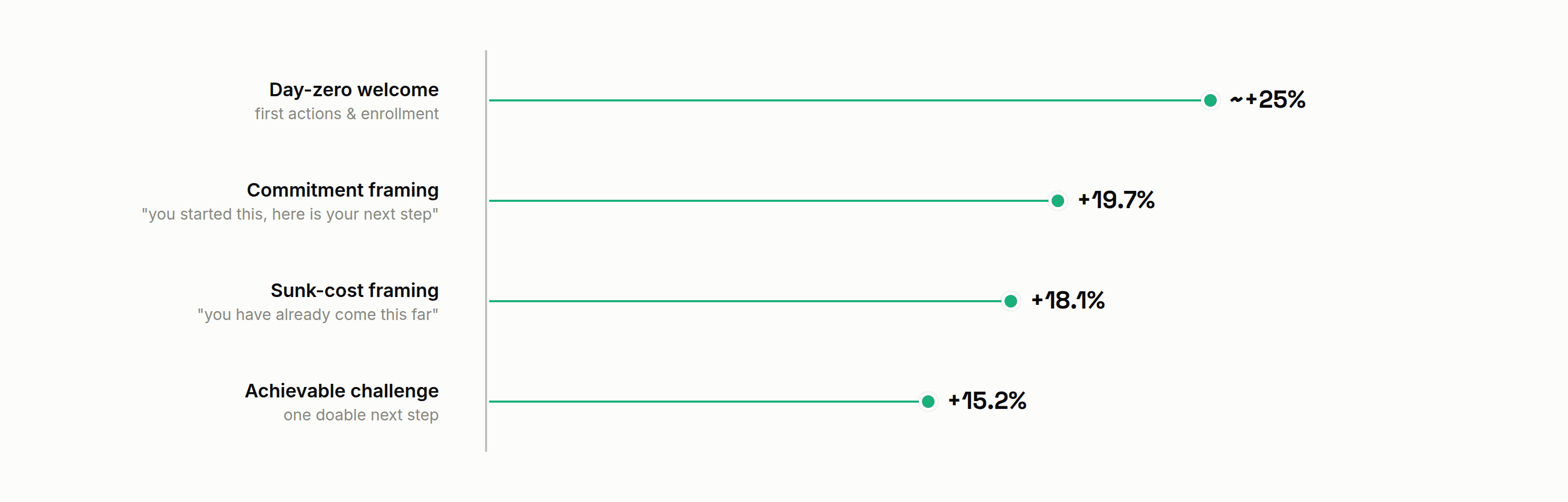
Frame it around commitment ("you started this, here is your next step"), sunk cost ("you have already come this far"), or an achievable next step. All three lifted enrollment against their holdouts: commitment by 19.7 percent, sunk cost by 18.1 percent, and achievable challenges by 15.2 percent, each across roughly 0.9 to 2.4 million sends.
Score these on enrollment, and do not panic when open rate falls. It dropped 9 to 26 percent on the winning campaigns while clicks and enrollment went up.
Send a strong day-zero welcome too. It lifted first actions and enrollment by around 25 percent.
Track each language separately so a weak translation in one market does not hide inside a healthy global average.
Learners drift and need a fast nudge. The next audience does the opposite. They stand still, on purpose, and need a reason to move.
Real estate and insurance
The sector: big, considered purchases like mortgages, rentals, and policies. People take their time, compare options, and hesitate, so the job of the message is to ease them forward.
What the data shows: messages that addressed a specific worry beat messages that just restated the rate or the offer. Naming the hesitation a prospect actually feels, and answering it, did more than repeating the deal. Getting-started sequences for newly signed users were also among the steadier performers.
Practical moves:
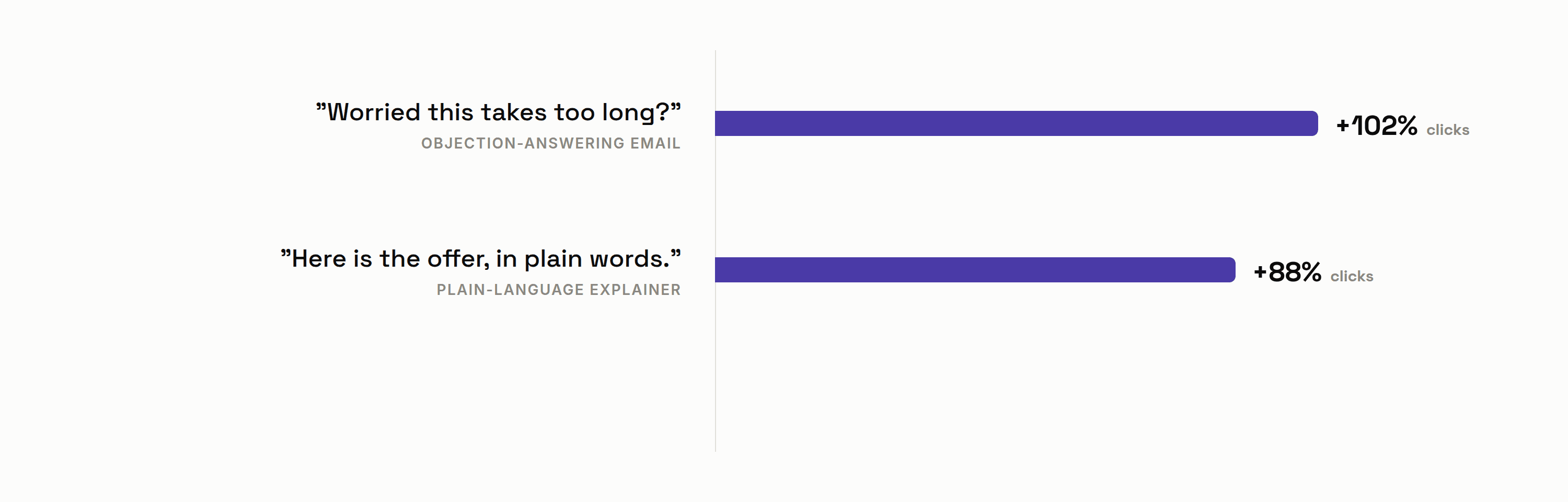
Build the message around the specific objection a prospect has, such as "worried this takes too long?", instead of leading with the rate or price. An email that answered a specific objection lifted clicks 102 percent against control, and a plain-language explainer that simplified the offer lifted clicks 88 percent.
These are engagement gains so far, so confirm the lift on your own conversion event before you scale them.
Treat the getting-started sequence after signup as a real conversion driver, not an afterthought.
Big purchases hinge on one well-timed answer. Habits hinge on many well-timed nudges.
Health, fitness and wellness
The sector: apps and products built around habits and routines, like fitness, supplements, and wellness programs. Value comes from people sticking with a behavior over time.
What the data shows: reminders tied to a habit or a reorder cycle were the productive surface. Reward and "redeem your points" messages, on the other hand, gained nothing from rewriting. The value sits in the offer itself, not the wording around it.
Practical moves:
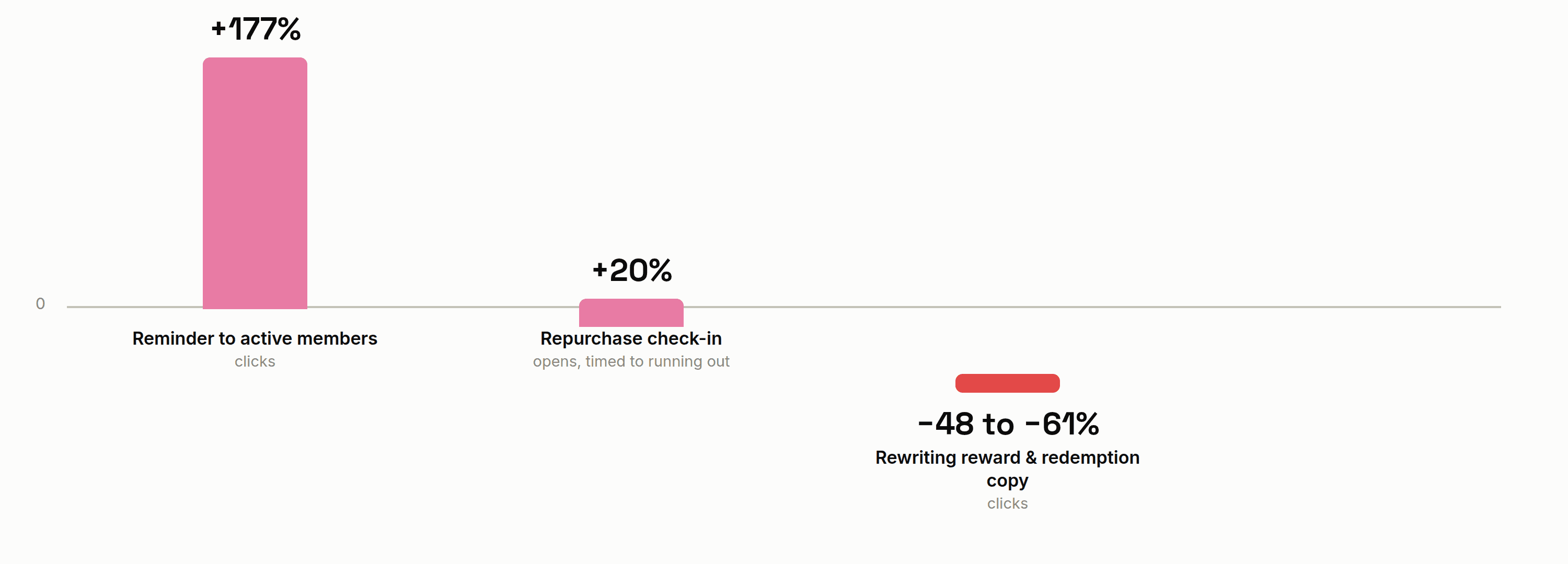
Time replenishment and repurchase reminders to the user's actual cycle of running out. A repurchase check-in lifted open rate 20 percent against control, and a reminder to active members lifted clicks 177 percent.
Keep reward and redemption messages simple. Rewriting that copy lost 48 to 61 percent on clicks.
Spend your effort on the habit-moment reminders, and score them on whether the person resumed the behavior.
Streaming and media
The sector: subscription content services like TV, film, and reading apps. The goal is to get people watching or reading enough that they keep paying.
What the data shows: activation reminders worked best when they pointed at one specific thing the subscriber had not used yet, like a channel or feature. Content digests worked best when they reflected what the person already watches or reads. Both drove real watch activity, not just opens.
Practical moves:
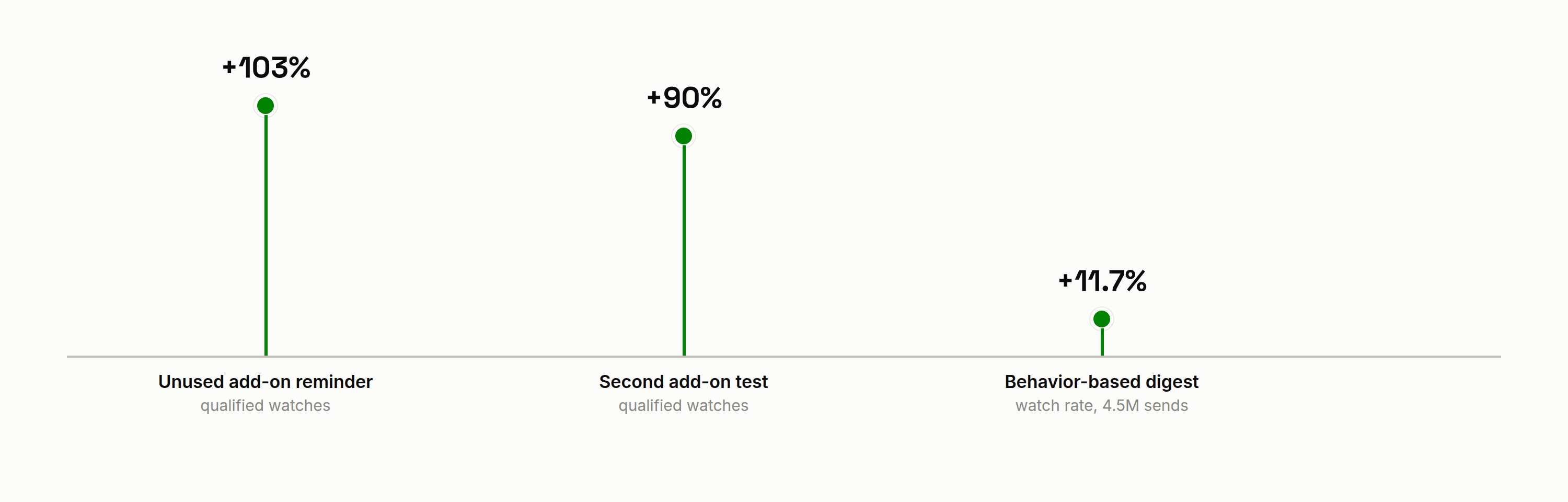
Send activation reminders about a specific part of the service a subscriber has not tried yet, and score them on watching, not opening. Reminders pointing at an unused add-on lifted qualified watches by 90 and 103 percent against control.
Tune content digests to viewing and reading history. A behavior-based digest lifted its qualified-watch rate 11.7 percent across 4.5 million sends.
Remember that the trigger carries the win as much as the copy does. The reminder only works when it points at the unused thing.
Two rules that hold across every sector
First, give a reminder a reason to exist beyond the countdown. A genuinely useful daily reminder lifted opens 18.7 percent and conversions 16.8 percent across 2.1 million sends. Bare "your streak expires" and "you have been away" pings lost 10 to 16 percent on opens across 4 million and 1.9 million sends. Usefulness wins. Pressure alone does not.
Second, do not bother rewriting recommendation digests. The high-frequency "your weekly picks" format gets its value from the items inside it. Rewriting the wrapper around them came out net negative across the significant tests. Spend that effort on the triggered, moment-based campaigns instead.
The thread running through all of this is consistent. Fintech leans on what a user already does with their money. B2B SaaS leans on onboarding. Learning and wellness lean on timing. Streaming leans on what people actually watch. The move underneath them is always the same. Send the message at the right moment. Point it at something specific. Score it on the action that matters. Then let the words do their part, once everything around them is in place.
Want more field notes like these, straight from live experiments? Subscribe to the newsletter below. We only send what we have tested.